Skip to content
Winning a bid on a piece of heavy equipment feels like a victory until the shipping invoice arrives. For many fleet managers and independent contractors, the cost of transporting an excavator or dozer from the auction yard to the job site can rival the purchase price itself.
This sticker shock often stems from the complex heavy haul trucking logistics variables involved in moving oversized machinery. Unlike standard parcel delivery, where prices are predictable, heavy haul is a volatile market driven by supply, demand, and regulatory hurdles.
High shipping expenses are not inevitable, nor should they be accepted as a fixed penalty of doing business. By understanding the underlying freight rate mechanisms and applying strategic planning, you can significantly reduce your transportation costs.
Smart equipment buyers often conduct a Ritchie Bros. shipping rate comparison or check multiple auction site quotes before they place bids.
The secret involves knowing how to make your freight compliant and efficient for carriers. The last mile accounts for 53% of the total cost of shipping, making it the most expensive part of the journey.
Mastering this final leg of the auction process is the difference between a profitable flip and a break-even disaster. Many experienced operators weigh buying locally against distant auction opportunities to minimize transportation costs.
What Determines Auction Shipping prices
To cut costs effectively, you must see where your money actually goes. Unlike parcel shipping, heavy haul trucking is not a flat-rate world. It is a dynamic market influenced by regulatory geography, equipment availability, and physics. Factors that influence shipping cost include:
Distance and Lane Demand
Miles matter, but lane balance matters more. This concept refers to the load-to-truck ratio on a specific route. If hundreds of trucks are stuck in a city looking for a load home, carriers drop rates to avoid deadheading (driving empty).
Conversely, shipping into a “dead zone” where no outbound freight exists will force you to pay for the driver’s round trip. Understanding these flows can help you predict when rates might be lower.
When you arrange shipping from an auction site, qualified carriers and heavy haulers will factor in these lane dynamics.
Dimensions and Weight
In heavy haul, every inch and pound translates to specific costs. Standard legal limits generally cap at 8.5 feet wide and 80,000 pounds gross weight. Once you exceed these, you enter the world of multipliers.
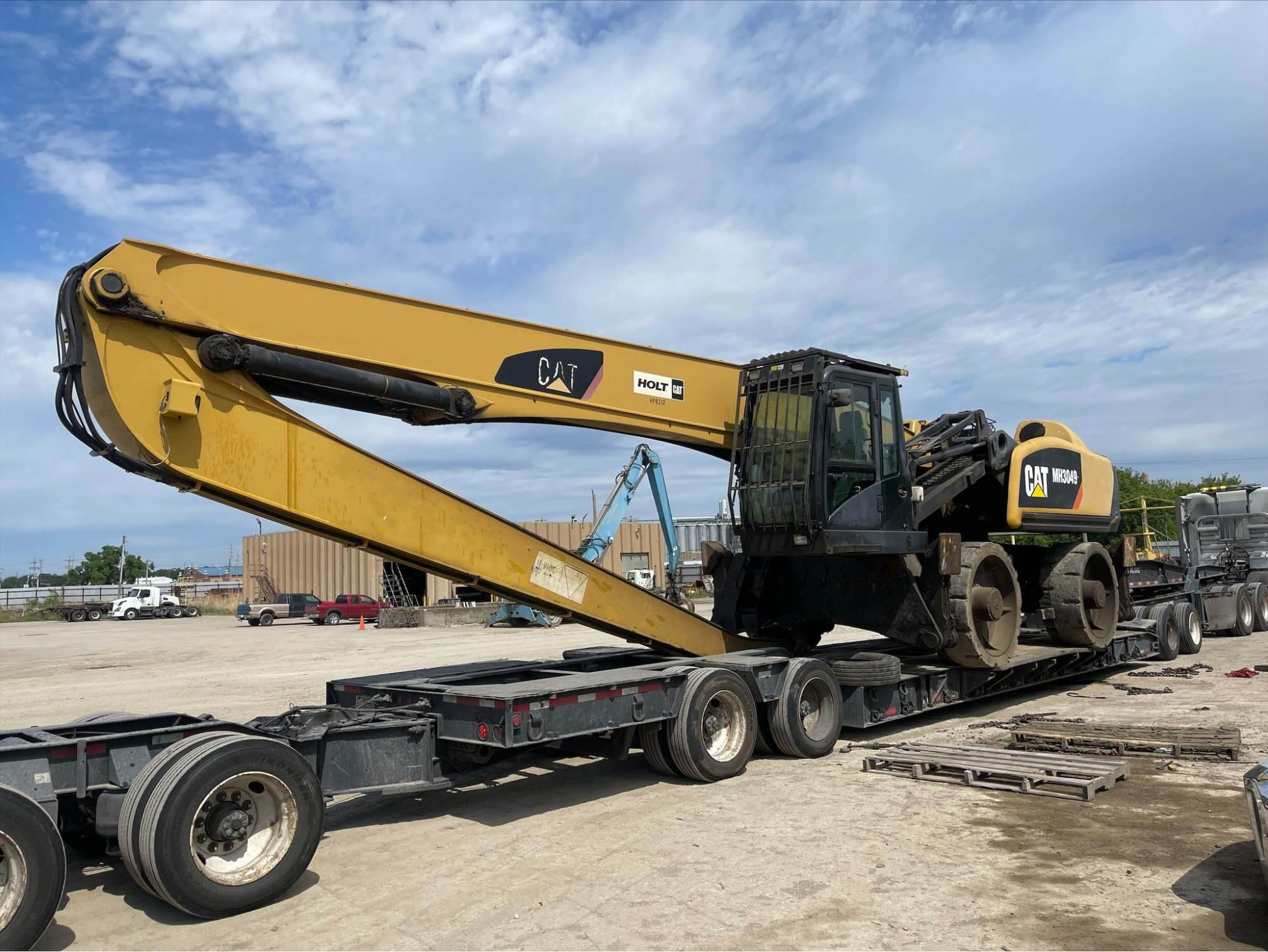
A load that is just a few inches over the width may require permits in every state it travels through, exponentially increasing the administrative burden and cost. Heavy machinery often requires specialized flatbed trailers to accommodate oversized dimensions.
Permits and Pilot Cars
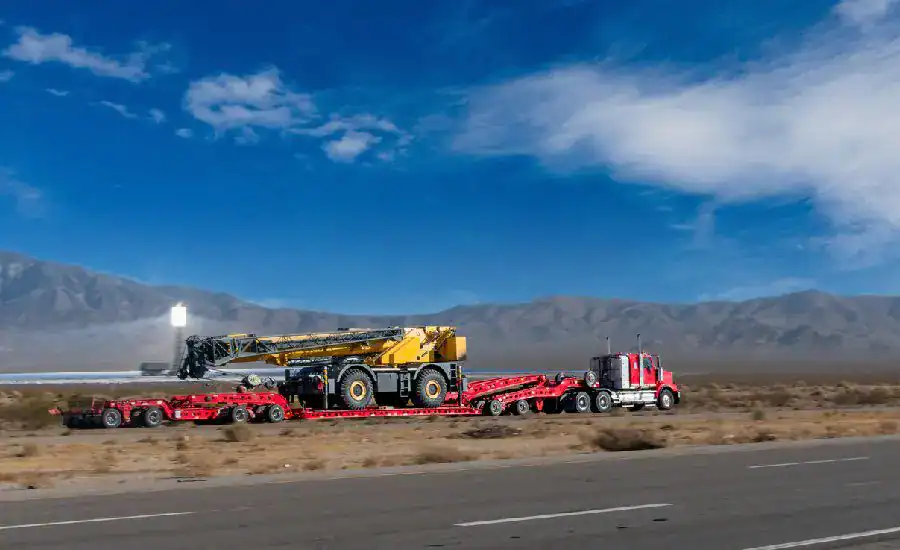
When a crane transport project tips the legal limit, the move requires state-specific permits. If the load is significantly oversized, states mandate pilot cars to warn traffic and ensure safety.
For extreme superloads, police escorts may be required, which adds hourly rates for law enforcement personnel to your bill. Before moving heavy machinery from any auction site, verify permit requirements through your carrier’s information contact.
Insurance Costs
There is a massive difference in risk between hauling a pallet of bricks and using an excavator. Higher-value cargo requires higher liability coverage to protect against total loss.
Specialized brokers ensure carriers carry all-risk insurance for high-value machinery, which is a premium service that reflects in the final price.
Key Insight: A route with hundreds of empty trucks looking for a load home will always be cheaper than shipping into a remote dead zone, regardless of mileage. |
5 Proven Ways To Cut Your Transportation Costs
Now that you understand the cost drivers, here are actionable tactics to reduce them. These strategies leverage logistics principles to lower risk for the carrier, which translates directly into lower rates for you.
Implementation of even a few of these tips can result in substantial savings.
Consolidate Multiple Lots
Buying in bulk allows you to ship in bulk. Moving three items on separate flatbeds is inefficient compared to using a single specialized trailer.
Consolidating onto a multi-axle setup drops total costs significantly because you are paying for one prime mover and one driver instead of three. Whether you’re coordinating a shipment from a sale or regular inventory transfer, always ask your logistics provider about load stacking options.
Prep the Load
Time is money for drivers. Ensure batteries are charged, tires are inflated, and loose attachments are secured before the truck arrives. Avoiding detention delays can save hundreds in standby fees and keep your relationship with the carrier positive for future moves.
Leverage Partial Loads
If shipping smaller heavy equipment transport items, ask for partial pricing. This involves matching your cargo with empty space on a trailer moving in our direction.
While it might take slightly longer to coordinate, sharing deck space is one of the most effective ways to slash costs. Each partial shipment reduces your per-unit expense significantly.
Choose the Right Trailer
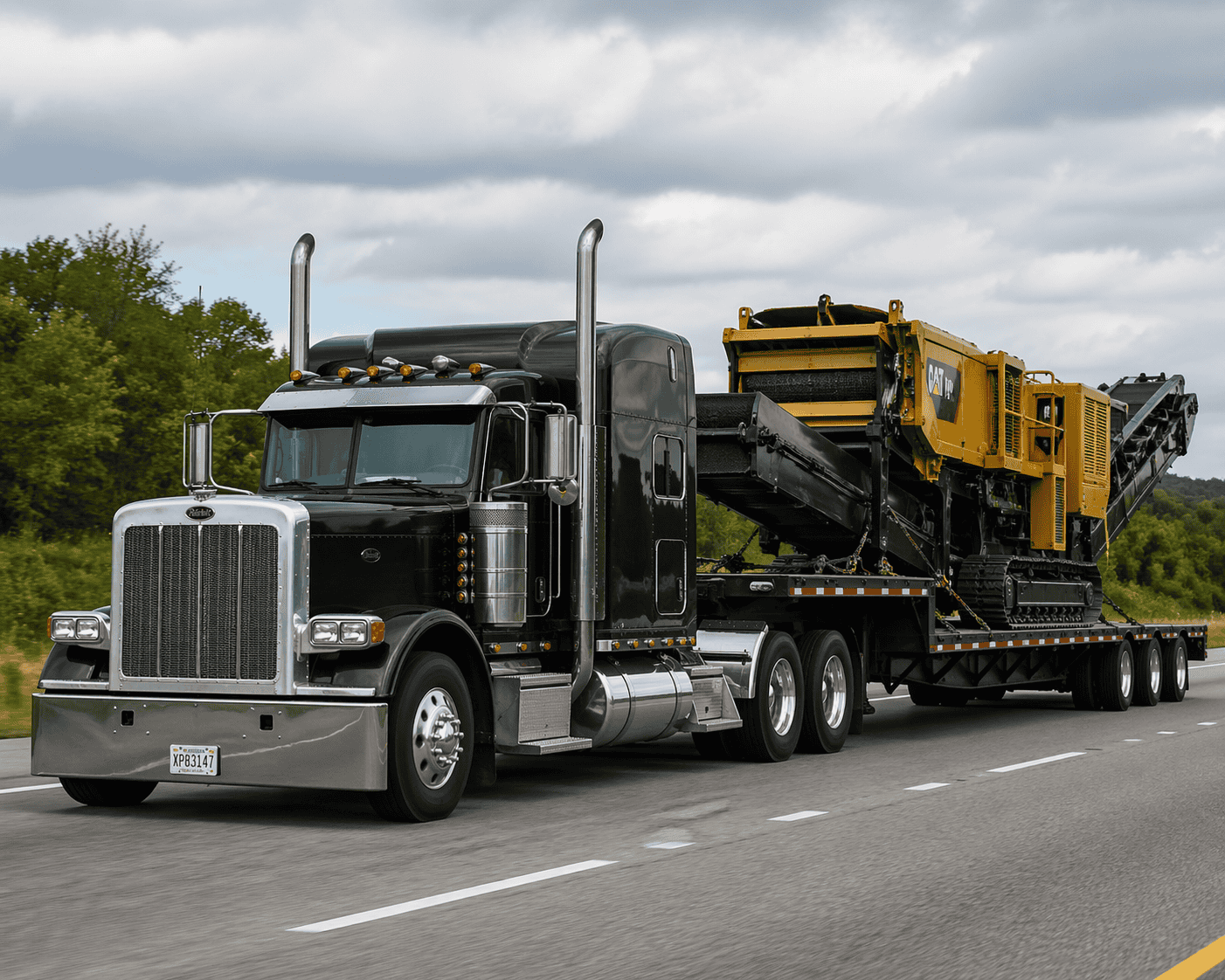
Ordering a massive Removable Gooseneck (RGN) for a load that fits on a step-deck wastes money. RGNs are specialized equipment with higher operating costs.
Understanding trailer capabilities is key to cost efficiency. Do not pay for trailer capacity you do not need. This is a critical point when planning your logistics
Work with Compliant CompaniesCarriers
Cheap carriers often lack proper insurance or safety ratings. If a carrier gets impounded by the Department of Transportation, the towing and storage fees often fall on you.
Rigorous vetting ensures you never pay for a carrier’s incompetence, protecting your investment from legal and financial nightmares. Always request proof of credentials before you sign any agreement, and verify that their payment terms are transparent.
Warning/Important: As an equipment buyer, never guess your equipment’s dimensions. If a machine is wider than declared, it voids permits. Always verify specs personally to avoid costly delays. |
Standard Freight vs. Heavy Equipment Pricing
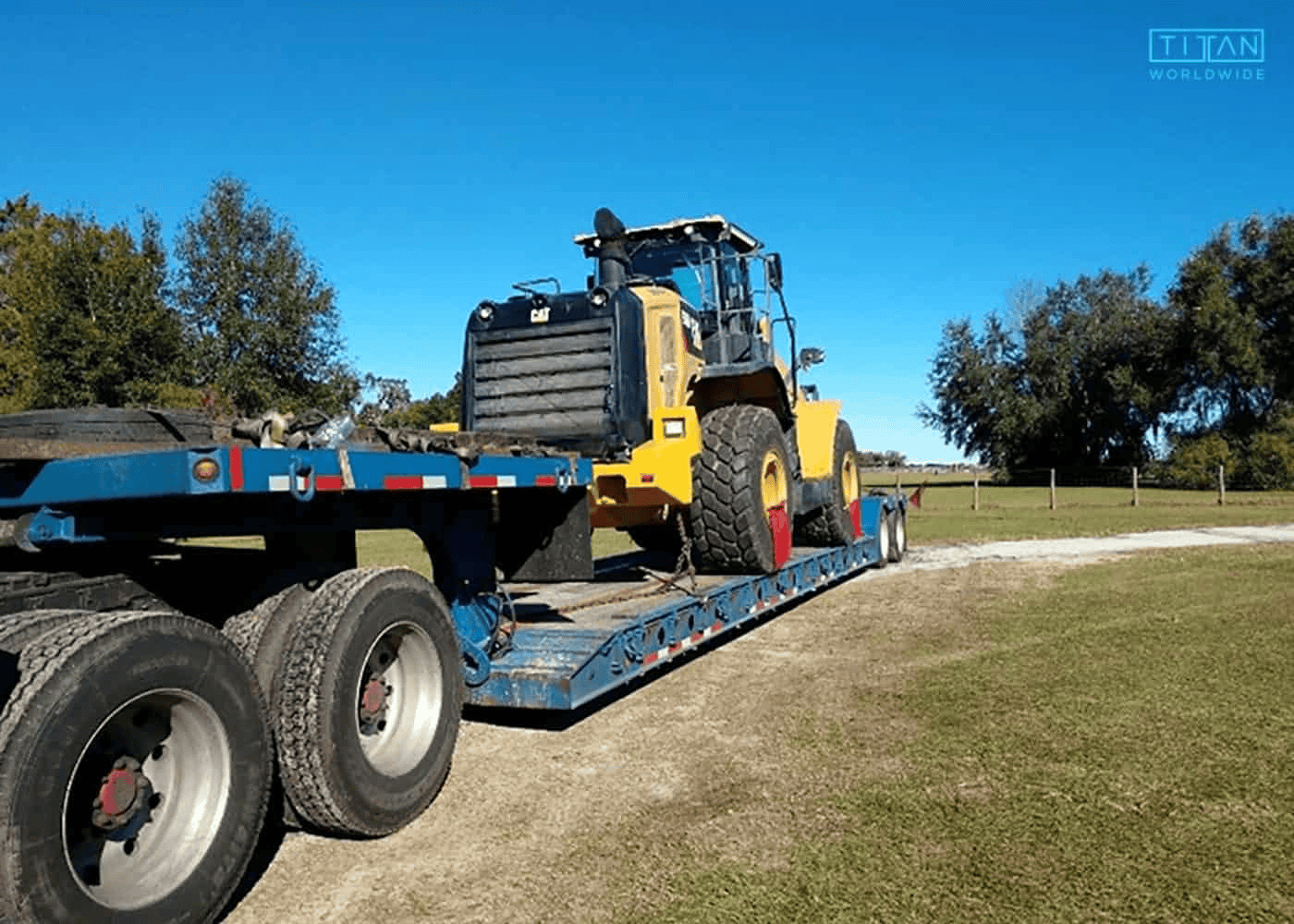
Heavy haul is a different animal compared to standard freight. Moving a pallet is a turn-key operation, while moving a crane or a mining truck is a project. Standard freight typically requires no special permits and moves on a predictable network of hubs and spokes.
Oversized transport changes the equation entirely. You are paying for the engineering of the route, not just the diesel. This process includes analyzing vertical clearances, bridge weight restrictions, and construction zones that could trap a large load.
This includes axle weight calculations to ensure bridges can hold the load without structural damage. It also involves specialized liability coverage that protects the half-million-dollar asset, which standard cargo policies simply do not cover.
Here’s a quick breakdown of common trailer types and their typical permit requirement:
Trailer Type | Typical Cargo | Permit Need? |
|---|---|---|
Dry Van / Flatbed | Parts, Small Machines | Rarely |
RGN / Lowboy | Excavators, Mining Gear | Yes |
Why Choose Titan Worldwide For Heavy Machinery Shipping
Cutting costs shouldn’t mean cutting corners on safety. Titan Worldwide balances budget with reliability as a project logistics expert. We handle over 500 loads a month, giving us the volume leverage to negotiate better rates with our network of vetted carriers.
We maintain a 96% on-time delivery rate by anticipating permit delays before they happen. Our end-to-end management covers cross-border documentation for moves into Canada and Mexico, pilot car coordination, and even specialized wind turbine transportation.
Each shipment is carefully tracked, and we ensure you sign off on all documentation with full transparency. We act as your project manager, not just a middleman.
Move Your Oversized Load With Confidence
Shipping heavy equipment from an auction doesn’t have to break your budget. By consolidating loads, ensuring accurate dimensions, and choosing the right partner, you can trim thousands off your final invoice. The key is partnering with a knowledgeable logistics team like Titan Worldwide that understands the nuances of heavy haul.
Curious how much you might save on your next auction win? Let our heavy-haul specialists map the smartest route for you. Contact us for a customized quote, and we’ll take it from there.

Ashley Hawkins is the Vice President of Business Development at Titan Worldwide and a recognized expert in heavy haul, over-dimensional, and specialized freight transportation. With over a decade of hands-on experience managing complex logistics projects across construction, energy, infrastructure, and government sectors, Ashley brings real-world knowledge to every shipment.
She works directly with carriers, project managers, and field teams to plan safe routing, secure permitting, and ensure regulatory compliance for oversize and overweight loads nationwide. Ashley’s insights are grounded in on-site experience, industry best practices, and a commitment to delivering reliable, transparent, client-focused transportation solutions.