Skip to content
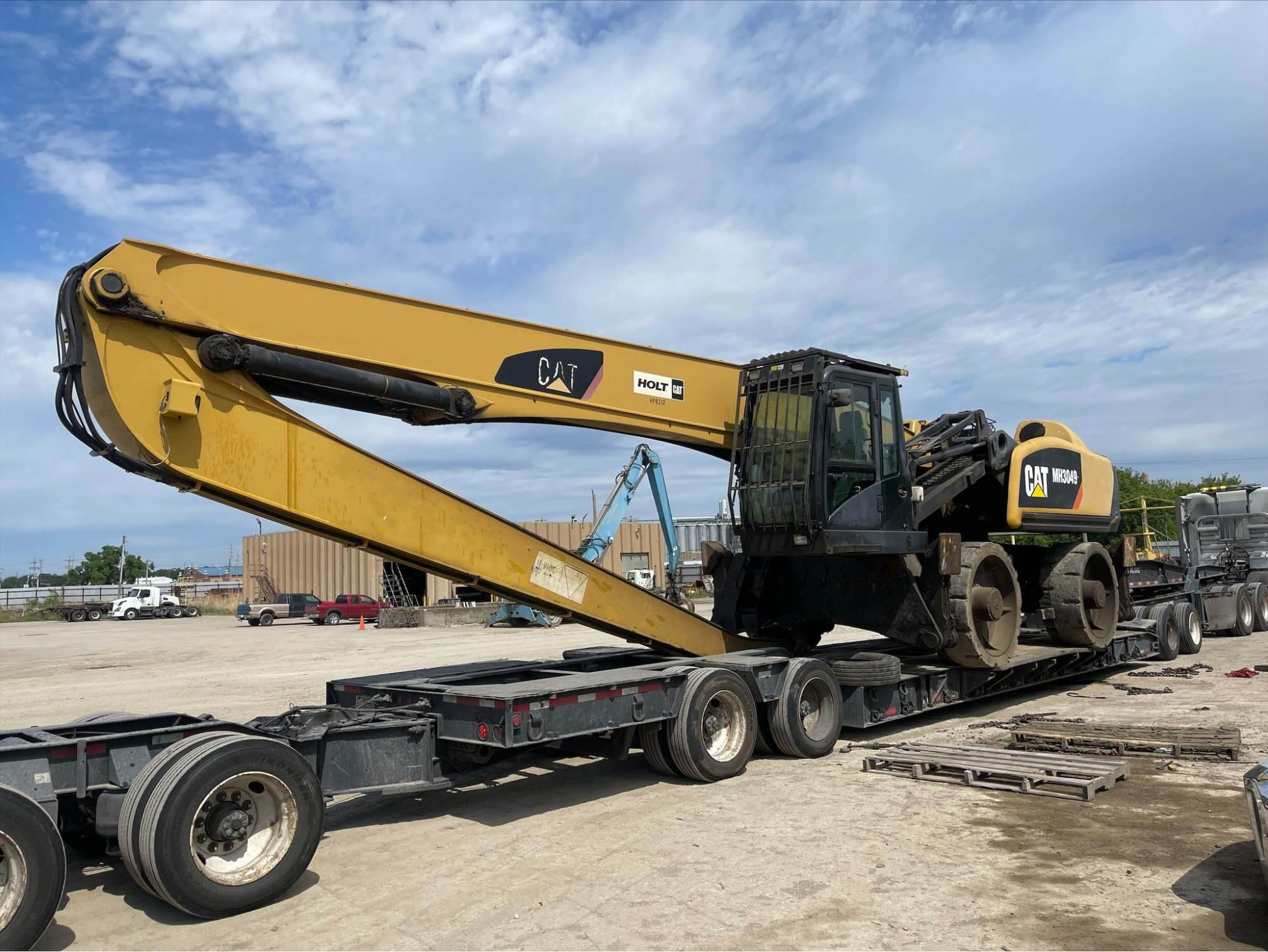
The adrenaline of a heavy equipment auction is undeniable. Whether you are bidding online or standing in the lane at Ritchie Bros auction site, the moment the gavel drops, you feel that rush of victory. You have secured the asset your fleet needs.
But as the excitement fades, a complex reality sets in when you realize that pricey pound excavator is sitting in Orlando, and your job site is in Texas.
Heavy equipment transport isn’t like shipping standard freight. You can’t just throw a D8 dozer into a dry van and wave goodbye.
Successful heavy haul trucking logistics requires a precise choreography of permits, specialized trailers, route surveys, and compliance with varying state Department of Transportation (DOT) regulations.
For many buyers, the logistics cost and complexity can turn a great deal into a logistical nightmare if not managed correctly. This guide is your stress-free playbook.
We are going to walk you through the exact steps to haul your auction wins safely, legally, and on budget. From estimating costs before you bid to the final post-delivery inspection, here is how you move heavy equipment without the headache.
1 – Plan And Budget Before Bidding Starts
The most common mistake we see in auction logistics happens before tightening a strap, and this is failing to account for transport costs in the bidding budget. It is not uncommon for the cost of hauling specialized equipment to rival the winning bid itself, especially if the machine requires extensive permitting or pilot cars.
To protect your margins, you must treat the freight estimate as part of the acquisition cost. Several variables drive these costs up quickly. Mileage is obvious, but oversize/overweight status is the real budget killer.
If your load exceeds legal dimensions, you are looking at permit fees for every state you cross, potential route surveys, and the cost of escorts.
Economic factors also play a role in your planning. The PPI shows that prices increased for freight transportation and equipment 2.2% in November 2025 from November 2024. This inflation impacts fuel surcharges and base rates, meaning last year’s quotes may no longer be accurate.
Additionally, cargo value affects insurance premiums. Arranging specialized crane transport requires carrier liability coverage that exceeds standard minimums. Before you get to the auction site, build a simple logistics spreadsheet to estimate your total landed cost.
Your tracking sheet should include:
- Transit information: Origin, destination, and the pick-up date
- Item Description: Dimensions, weight
- Trailer Requirement: RGN, Lowboy, Step Deck, etc
- Estimated Freight Cost: A conservative quote range
Don’t guess on permits. Use Titan Worldwide’s available resources or speak to a representative beforehand. A quick check can tell you if that “standard” load is actually three inches too wide, triggering hundreds of dollars in permit fees and days of delay.
Warning/Important: Never assume a load is “standard” size. Even three inches of extra width can trigger expensive permit fees and delays. Always run a quick equipment dimension check before placing your bid to protect your margins. |
2 – Decode Heavy Haul Versus Standard Rules
Understanding where “standard freight” ends and “heavy haul” begins is critical for compliance. Standard freight pallets, crates, or smaller machinery rarely require permits and can move easily on dry vans, flatbeds, or step-decks. The logistics are straightforward. Just load, drive, and unload.
Transporting heavy machinery is different. Once your cargo exceeds the legal dimensions defined by the Federal Motor Carrier Safety Administration (FMCSA) and State Departments of Transportation, you enter the world of specialized transport.
Effective oversize transport requires navigating these complex regulations to avoid impoundment, massive fines, and safety score hits. You also need experienced transport providers who understand how to move your machinery safely while maintaining full compliance
Oversize at a Glance: General Legal Limits
Here is a quick comparison of legal dimension limits:
Dimension | Standard Legal Limit (Approx.) |
|---|---|
Width | 8′ 6″ (102 inches) |
Height | 13′ 6″ to 14′ depending on state |
Length | 48′ – 53′ (Trailer length) |
Warning: Exceeding even one legal dimension limit instantly shifts your shipment into heavy haul territory, triggering permit requirements, route restrictions, and higher transport costs |
3 – Match Your Load to the Right Trailer & Carrier

You wouldn’t use a screwdriver to hammer a nail, and you shouldn’t put a heavy excavator on a standard flatbed. Transporting heavy machinery requires careful planning, and trailer matchmaking is about safety and legality.
The goal is to reduce the loaded dimensions as much as possible to minimize permit costs.
For example, a tall wheel loader might put you over 14 feet high on a flatbed (illegal route territory), but sitting in the well of a Removable Gooseneck (RGN) or Lowboy brings it down to 13′ 6″. This converts an expensive move into standard heavy haul trucking.
Understanding equipment dimensions is crucial when matching heavy machinery to the appropriate trailer, especially for complex loads. Here is a quick guide:
- Step-Deck: Good for taller items, typically loaded with cranes or ramps
- RGN: Essential for heavy and drivable equipment
- Lowboy: For extremely high loads needing the lowest possible deck height
- 13-Axle Setup: Reserved for super heavy loads exceeding standard weight limits like 40,000–80,000 lbs
4 – Prep Your Heavy Equipment for a Hassle-Free Pickup
The auction yard is a busy place, and they are not responsible for preparing your machine for transport. That responsibility falls entirely on you and your carrier.
Ritchie Bros. yards in particular run on a strict first-come, first-served basis with no slowdowns for unprepared drivers. Before your carrier arrives, confirm these essentials are handled:
Equipment must be paid in full before removal begins. Your driver will need a release ticket from the Yard Office before loading can start, no exceptions. If you are shipping internationally, have the Bill of Lading ready in advance. Keys must remain inside the unit until your carrier takes possession.
One detail that catches buyers off guard: self-propelled equipment that can be driven must be driven off the yard under its own power. Ritchie Bros. will not lift or reposition equipment that is capable of moving; that is the buyer’s responsibility. If your machine has a mechanical issue that prevents it from being driven, coordinate with your carrier before pickup day, not after arrival.
Also, confirm your carrier meets Ritchie Bros.’ insurance requirements. They require General Liability, Workers’ Compensation, and Cargo Insurance from all transport companies operating on site. If your carrier cannot provide certificates on request, find a different carrier.
5 – Load & Unload Safely
Loading is the most dangerous phase of the transport lifecycle. Approximately 75% of struck-by fatalities involve heavy equipment such as trucks or cranes. Only experienced carriers and operators should handle controls during loading.
At Ritchie Bros. sites, safety compliance is non-negotiable and enforced on site. Your driver and any personnel in the loading area must arrive with:
- High-visibility safety vests and proper footwear
- A confirmed spotter; brakes and wheel chocks are mandatory when using loading docks
- Full situational awareness: these are high-traffic yards with multiple loads moving simultaneously
Ramp access comes in three heights (20″, 36″, and 52″) so confirm your trailer configuration and the equipment’s ground clearance in advance to avoid wasted time repositioning. All loading and unloading is strictly limited to daylight hours, which means late afternoon pickups that run long can push you to the following morning.
For aerial equipment, fall protection rules apply without exception. If your operator needs to enter the basket for any reason during loading or unloading, a safety harness is required regardless of height. No threshold, no exceptions. Customers previewing aerial equipment must operate from the ground wherever possible.
Forklift or loader assistance from Ritchie Bros. staff is available only at their discretion. Do not count on it. Oversized or heavy items that exceed their equipment capacity must be handled entirely by the buyer or carrier.
If you are delivering equipment to a Ritchie Bros. yard, stop at the Yard Office first and sign the required release form before entering the loading area. Note that Ritchie Bros. does not issue delivery receipts. They will sign a Bill of Lading for confirmation only. Owner contact information must accompany all delivered equipment, and all units must exit through the designated truck gate.
If you are hiring a third party to load at the auction site, verify their credentials to ensure they follow safety protocols for a successful and safe heavy equipment transport.
6 – Route & Schedule Like a Pro
In heavy haul, the shortest distance between two points is rarely a straight line. It is the route that bridges can support and permits allow. When transporting heavy machinery, professional trucking logistics requires realistic expectations regarding permit lead times.
While some states issue automated permits in hours, others, like Pennsylvania, can take days for super loads requiring bridge analysis and weight restrictions evaluation.
You must also account for curfews. Many states prohibit oversized load shipping on weekends, holidays, or at night.
7 – Post-Delivery Inspection
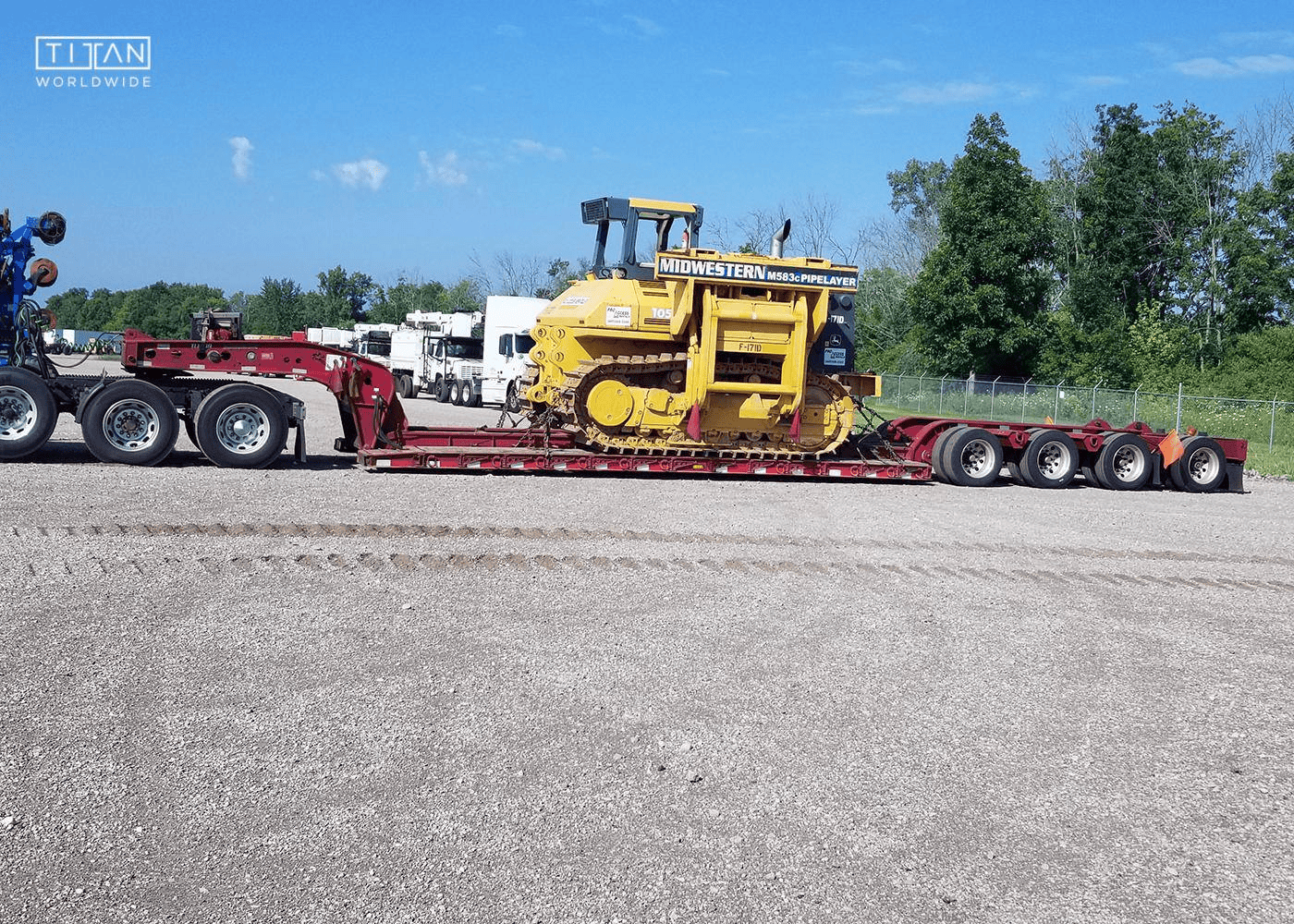
The job is not done when the truck pulls up to your gate. The delivery phase is your last chance to verify that the service you paid for was executed correctly.
Before the driver unchains the machine, conduct a thorough walk-around and compare the equipment against the photos you took at pickup. Look for new scratches, glass cracks, or impact marks on the counterweight. If anything looks off, document it before signing anything.
Collect your full paperwork bundle immediately: the Bill of Lading, insurance certificates, and delivery confirmation. If the carrier cannot produce these on the spot, do not release them until they do.
Why Auction Buyers Trust Titan Worldwide for Heavy Equipment Shipping
At Titan Worldwide, we don’t just move freight, we engineer logistics solutions for the industries that build the world. Auction buyers trust us because we bring a level of precision that generalist brokers cannot match.
We handle Ritchie Bros. pickups regularly. We know the yard procedures, the insurance requirements, the daylight-hour restrictions, and exactly what documentation needs to be in hand before the driver clears the gate. When you work with us, your carrier arrives prepared; PPE on, spotter confirmed, release ticket in hand, because we handle that coordination before the truck ever leaves the yard.
With a 96% on-time delivery rate across 500+ monthly loads, reliability is not an accident. We maintain a low 1:20 client-to-rep ratio, which means when you call, you speak to a dedicated expert who knows your project, not a call center.
Whether you secured a single skid-steer or an entire fleet at auction, our heavy equipment shipping specialists handle every mile, permit, and detail. Contact us for a quote.
Master Your Heavy Haul Shipping
Whether you snagged a single skid-steer or an entire fleet, Titan Worldwide’s heavy equipment shipping specialists simplify every mile, permit, and all. Curious which trailer makes the most sense for your new asset? Contact us for a heavy equipment transport quote.

Ashley Hawkins is the Vice President of Business Development at Titan Worldwide and a recognized expert in heavy haul, over-dimensional, and specialized freight transportation. With over a decade of hands-on experience managing complex logistics projects across construction, energy, infrastructure, and government sectors, Ashley brings real-world knowledge to every shipment.
She works directly with carriers, project managers, and field teams to plan safe routing, secure permitting, and ensure regulatory compliance for oversize and overweight loads nationwide. Ashley’s insights are grounded in on-site experience, industry best practices, and a commitment to delivering reliable, transparent, client-focused transportation solutions.